

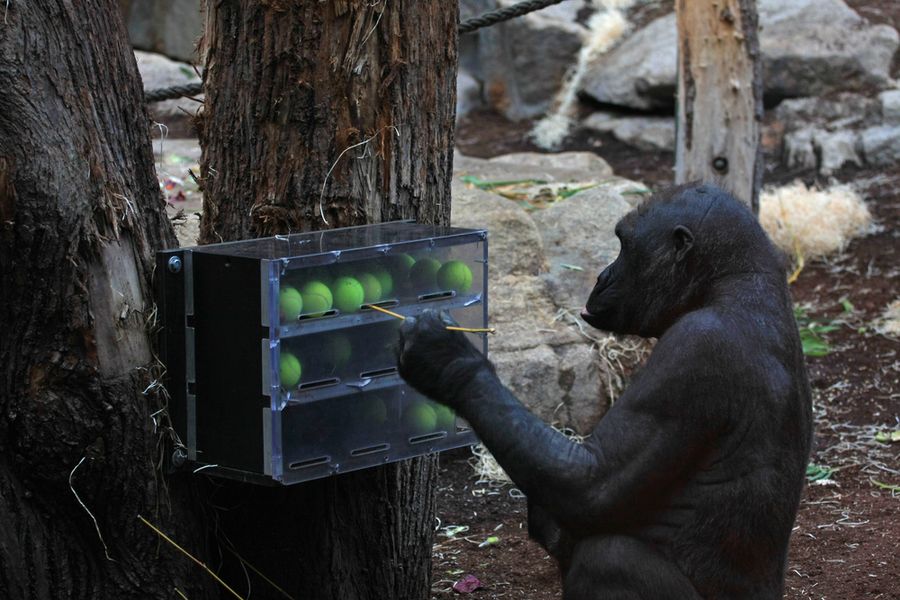
Animal intelligence offers a captivating glimpse into the cognitive abilities of various species, challenging traditional views and revealing surprising insights. From chimpanzees’ self-recognition to dolphins’ tool use, the study of animal cognition highlights remarkable examples of problem-solving and adaptability. As technology advances, understanding animal cognitive skills not only enriches knowledge but also supports conservation efforts.
Understanding Animal Intelligence
Animal intelligence is a fascinating and complex field of study that challenges traditional views of cognitive abilities across species. Researchers have increasingly focused on understanding how different animals perceive, remember, and solve problems, revealing surprising levels of intelligence in various species. This growing interest is fueled by observational experiments and advanced screening methods that measure cognitive skills such as perception, memory, and abstract reasoning (source).
Remarkable Examples of Animal Intelligence
Several animals have demonstrated intelligence that rivals or even surpasses that of young children in certain tasks. For instance, chimpanzees, sharing 99% of their DNA with humans, exhibit self-recognition and abstract thinking. They can recognize themselves in mirrors and videos, a skill that develops in humans around four years of age (source). Dolphins are another example, known for their complex communication skills and ability to use tools like sponges for protection. They also create mud traps to catch fish, showcasing their adaptability and problem-solving abilities (source).
Factors Influencing Animal Intelligence
Animal intelligence is influenced by various factors, including social behavior and environmental complexity. Animals living in complex environments or social groups tend to develop higher cognitive skills to navigate their surroundings and interact with others. For example, elephants demonstrate behaviors that suggest a consciousness of mortality, such as returning to gravesites and showing interest in deceased herd members, indicating a level of awareness and emotional complexity (source).
Technological Advancements in Studying Animal Intelligence
Technological advancements have significantly enhanced the study of animal intelligence. Tools like remote-controlled drones and AI have allowed researchers to observe animal behaviors more closely, revealing sophisticated behaviors previously underestimated in species like whales and dolphins. These technologies have expanded our understanding of animal cognition, highlighting unexpected similarities between humans and animals (source).
Unique Cognitive Skills Across Species
Different species exhibit unique cognitive skills that are often adapted to their specific environments. Ravens, for example, demonstrate advanced planning skills, surpassing human toddlers in certain cognitive tasks. They can select the correct tool to access a reward and exhibit patience by waiting long periods to use it, indicating a high level of problem-solving ability (source). Similarly, pigs have shown surprising intelligence by playing simple video games, understanding the relationship between joystick movement and screen actions, which highlights their cognitive abilities beyond what is typically expected (source).
Why You Should Learn More About Animal Intelligence Today
Exploring the intelligence of animals not only enriches our understanding of the natural world but also challenges our perceptions of human superiority in cognitive abilities. The study of animal intelligence reveals the diverse evolutionary paths that have shaped the cognitive skills of different species, offering insights into the complexity of life on Earth. As research continues to uncover the remarkable capabilities of animals, it becomes increasingly clear that intelligence is not exclusive to humans, but a shared trait across the animal kingdom. Understanding these cognitive abilities can lead to better conservation efforts and a deeper appreciation for the intricate behaviors of animals.