

Famous paintings often hold secrets beneath their surface, revealing hidden messages and symbols that enrich the viewer's experience. From Leonardo Da Vinci's cryptic codes to Michelangelo's subtle critiques, iconic masterpieces offer a glimpse into the artists' minds and societal influences. Understand how concealed elements transform the perception of art and invite deeper intellectual engagement.
Unveiling Hidden Meanings in Famous Paintings
Art has always been a medium for expression, often containing layers of meaning that go beyond the surface. Many famous paintings are known for their hidden messages and symbols, which add depth and intrigue to the viewer's experience.
These concealed elements often reflect the artist's personal beliefs, critiques of society, or even playful self-inclusions. Understanding these hidden meanings can transform the way one perceives these masterpieces.
Leonardo Da Vinci's Masterpieces
Leonardo Da Vinci, a master of the Renaissance, is renowned for embedding hidden codes and messages in his works. The "Mona Lisa," for instance, is believed to contain microscopic initials "LV" in her right eye, a detail uncovered through advanced imaging techniques (source).
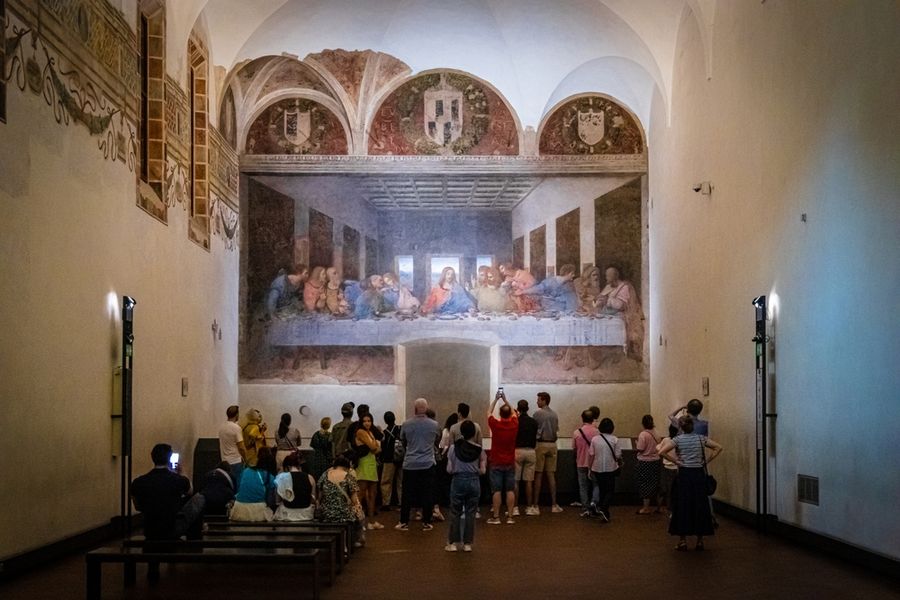
Additionally, "The Last Supper" is theorized to include a hidden musical composition, with the apostles' hands and loaves of bread forming notes that create a hymn-like tune when read from right to left (source).
Michelangelo's Subtle Critiques
Michelangelo's works are also rich with hidden meanings. In "The Creation of Adam," the cloak surrounding God and the angels resembles a human brain, suggesting a link between divine intelligence and human intellect. This hidden detail is thought to be a subtle critique of the church's stance on science, reflecting Michelangelo's expertise in anatomy and his possible intention to challenge religious views through art (source).
Furthermore, the Sistine Chapel ceiling contains a hidden depiction of a human brain, which may symbolize the imparting of divine knowledge to Adam or a covert protest against the church's rejection of science (source).
Caravaggio and Van Gogh's Personal Touches
Caravaggio's "Bacchus" includes a hidden self-portrait in the reflection of a wine jug, showcasing the artist's subtle inclusion of himself in his work (source). Similarly, Vincent Van Gogh's "Café Terrace at Night" is theorized to be a modern interpretation of "The Last Supper," featuring twelve figures around a central, long-haired figure, possibly symbolizing Jesus. This hidden homage to da Vinci's masterpiece adds a layer of religious exploration to Van Gogh's work (source).
Optical Illusions and Symbolism
Hans Holbein the Younger's "The Ambassadors" features an optical illusion of a skull, intended to be viewed from a specific angle. This element serves as a memento mori, reminding viewers of the inevitability of death (source).
Similarly, Hieronymus Bosch’s "The Garden of Earthly Delights" includes sheet music painted on a character’s derriere, which has been transcribed and adapted into modern music, adding an auditory dimension to the visual experience of the painting (source).
Why You Should Learn More About Fine Art Today
Exploring the hidden meanings in famous paintings offers a deeper appreciation of the artists' intentions and the cultural context of their time. These concealed elements not only enhance the visual experience but also invite viewers to engage with art on a more intellectual level.
By uncovering these secrets, one can gain insight into the historical, personal, and societal influences that shaped these masterpieces. Delving into the world of fine art reveals the complexity and richness of human expression, making it a rewarding pursuit for anyone interested in the arts.